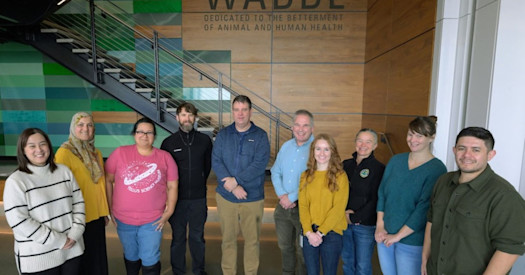
Sudarshan Pinglay:'Genome writing – to an increasing degree in the future – will be used for biological discovery and to expand the scope of biological engineering in the clinic or in biotech.'
[Editor’s Note: Sudarshan Pinglay, Ph.D., is the lead author on the paper, “Mammalian genome writing: Unlocking new length scales for genome engineering,” published in January in the journal Cell. The other authors are: Jay Shendure of the Brotman Baty Institute; and John Atwater, Ran Brosh, Matthew Maurano and Jef Boeke, all of the New York University School of Medicine. In this Q&A, Pinglay explains the paper’s thesis, some of its key points, distinguishes between the well-established practice of “genome editing” and the emerging practice of “genome writing,” and discusses the moral and ethical considerations inherent in “genome writing.”]
You and the other authors state in the paper that, “We are living in a golden age of mammalian genome editing.” Please elaborate.
We have known for many years of the genetic basis of disease, since the mid-1950s when the genetic basis for Sickle Cell Anemia. That led to this idea that, "If we had known the molecular basis of the disease, we, in theory, should be able to go in and fix that,” though we have not had the tools to do that in a safe and efficacious manner. All this completely changed with the advent of CRISPR in in the early 2010’s. A whole family of related technologies has brought this to the forefront – both for applications for discovery, as well as for therapeutic applications.
We are now able to make precise modifications at the few base pairs to the tens of base pairs scale pretty much where we want to with reasonable high efficiency. There are other issues with getting this work in the clinic, but they are not really addressing question of efficaciousness.
As a result, this has enabled a numerous applications. That’s what we mean when we say we “live in a golden age of genome engineering.”
However, despite this tremendous progress, these edits have been limited to short sections of the genome. This constrains many applications, such as unraveling the genetic basis of complex disease and engineering cells with new sophisticated functions for cell therapy. This is what we are trying to solve by developing and adopting genome writing methods that enable modifications of genomes at much longer length scales.
The point of our paper is that while we do live in a golden age of genetic engineering, making large changes to the genome – rewriting, not just editing genomes from the ground up – we are still very constrained. This is where lessons and technologies from the field of synthetic genomics can really be useful. That’s the main thrust of the paper. We detail a few different applications. That is the current state of the technology, when applied to mammalian genomes.
What is the thesis of the paper, “Mammalian genome writing: Unlocking new length scales for genome engineering?”
I would say the thesis is as follows: The field of genome engineering is evolving so rapidly that scientists are now beginning to be able to redesign and replace large genomic regions, or even entire genomes, with custom build synthetic DNA of any sequence. We refer to this as “genome writing.” Just like genome editing has been a technology you can use for both fundamental biological discovery, as well as for clinical or biotech applications, genome writing – to an increasing degree in the future – will be used for biological discovery and to expand the scope of biological engineering in the clinic or in biotech. This process is, in essence, what we are doing in the Seattle Hub for Synthetic Biology.
What about the financial costs preventing or changing the curse of disease for patients?
I’m not an expert on the potential financial or clinical aspects of this work. The reason that CRISPR was the inflection point was because it was very easy and cheap to reprogram CRISPR to a new site. We use RNA, which has simple base-pairing rules with DNA, and have ability to synthesize DNA and RNA. In terms of making an individual dose in a new genome editor that targets a new site, that’s actually fairly straight forward. This is in contrast with technologies that existed before, like zinc fingers, where reprogramming was very challenging. That is why they (those pre-CRISPR technologies) did not really take off. Whereas with CRISPR, reprogramming to target new sites is very, very straight forward.
I don’t think the cost comes from producing the genome editor itself. That is actually a marginal cost.
But, looking into the future, we are facing three challenges. One is production. Producing doses at scale where it is actually effective, especially if you are trying to do it in somatic tissues, you might need some large fraction of the cells edited in your body in order to see the effect. Second, there is an often quite a lengthy approval process. Many of the costs of an individual dose are associated with the FDA approval process. And thirdly, the delivery is still a bit of a challenge. This is less on the cost side and more on the efficacious side. We can get these things into certain tissues very well, but getting them into other tissues is much harder. But I am confident each of these challenges will get figured out in time.
The technology will be available much sooner than it is in people. Within the decade, I think, many of these technological things will be in place. For them to be in people, that is a different question. It reminds me of the saying, “The future is here, it’s just unevenly distributed.”
It also reminds me of the amazing case last year of “Baby KJ,” who received custom gene therapy within 6 months of being born with a rare metabolic disease that is typically fatal within two years. A year-plus later, the child, by all accounts, is totally fine, discharged from the hospital, and is at home, living a somewhat normal life. That would have been crazy ten years ago.
This being said, moving genome writing technologies to the clinic are still in the very early stages. However, I do expect this to happen within our lifetimes.
"I think we will get to a point where we have determined these technologies are safe and can be used for great good."
Where do you stand on the moral and ethical considerations inherent in genome writing?
For the time being, I am of the opinion that all of this work – the genome writing work – should be restricted to cell lines and somatic tissues, not germline modifications. It should not be applied to people just yet. We don’t know if it is going to efficacious or safe.
I also do not think it for scientists alone to make that call. Scientists develop the technology and ensure it is safe and efficacious. But then, it is for society as a whole to have that conversation about whether we want genome writing in our culture. I think we will get to a point where we have determined these technologies are safe and can be used for great good. At that point, we might be in a morally indefensible position if we were to hold that back from people who really need it.
Let’s say, as in the case of Baby KJ, we knew the treatment would be safe, but it would require modifying the child’s genome, I think we might be in a morally worse position to withhold that treatment.
There are always dual-use concerns – using these technologies for good, while nefarious actors could certainly use some technologies for bad. For example, there are discussions about having a synthetic DNA registry – getting all these companies together and every time someone orders DNA, we know what they ordered and would be able to track what happened to that synthetic DNA. This is not to say that we should be irresponsible. If we put the appropriate safeguards in place from a regulatory perspective, as well as societal and cultural perspectives, it can be a really powerful force for good.